Last updated November 21, 2026
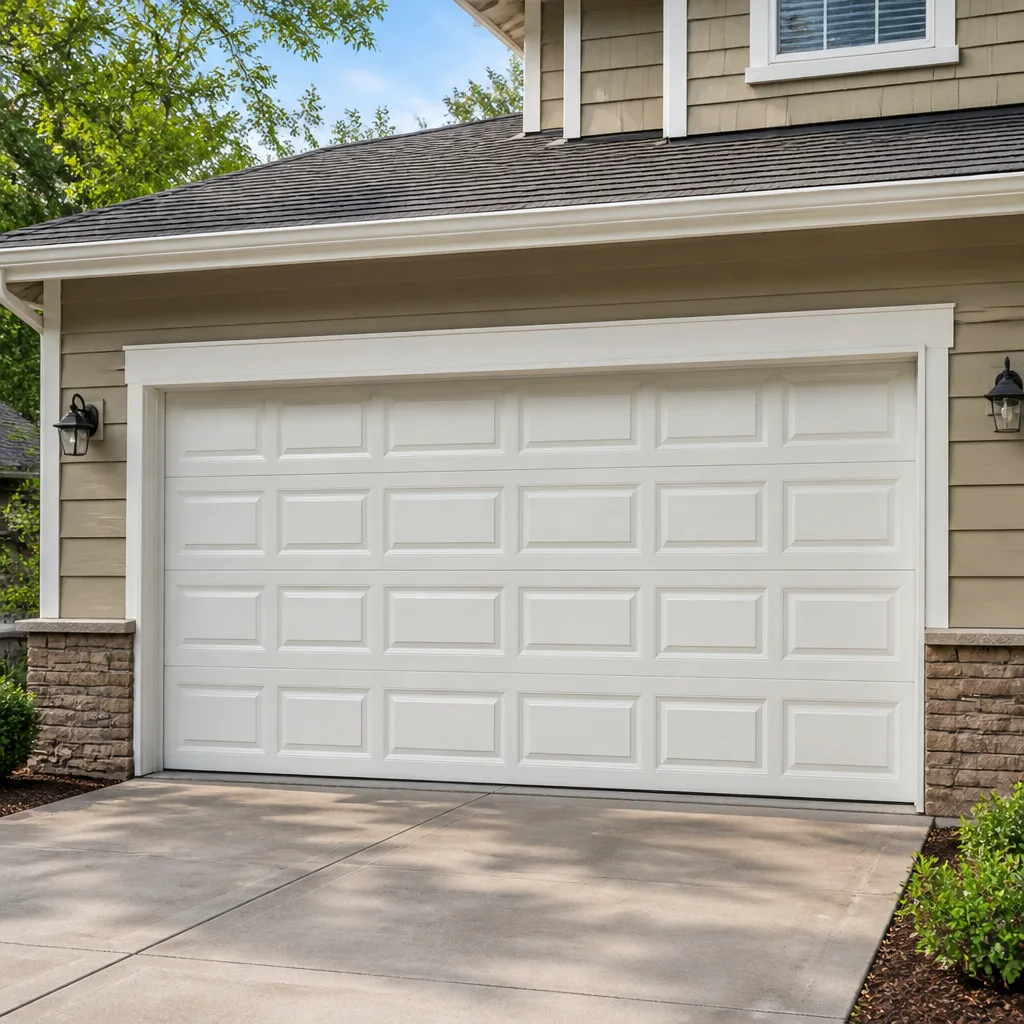 Raised-panel steel
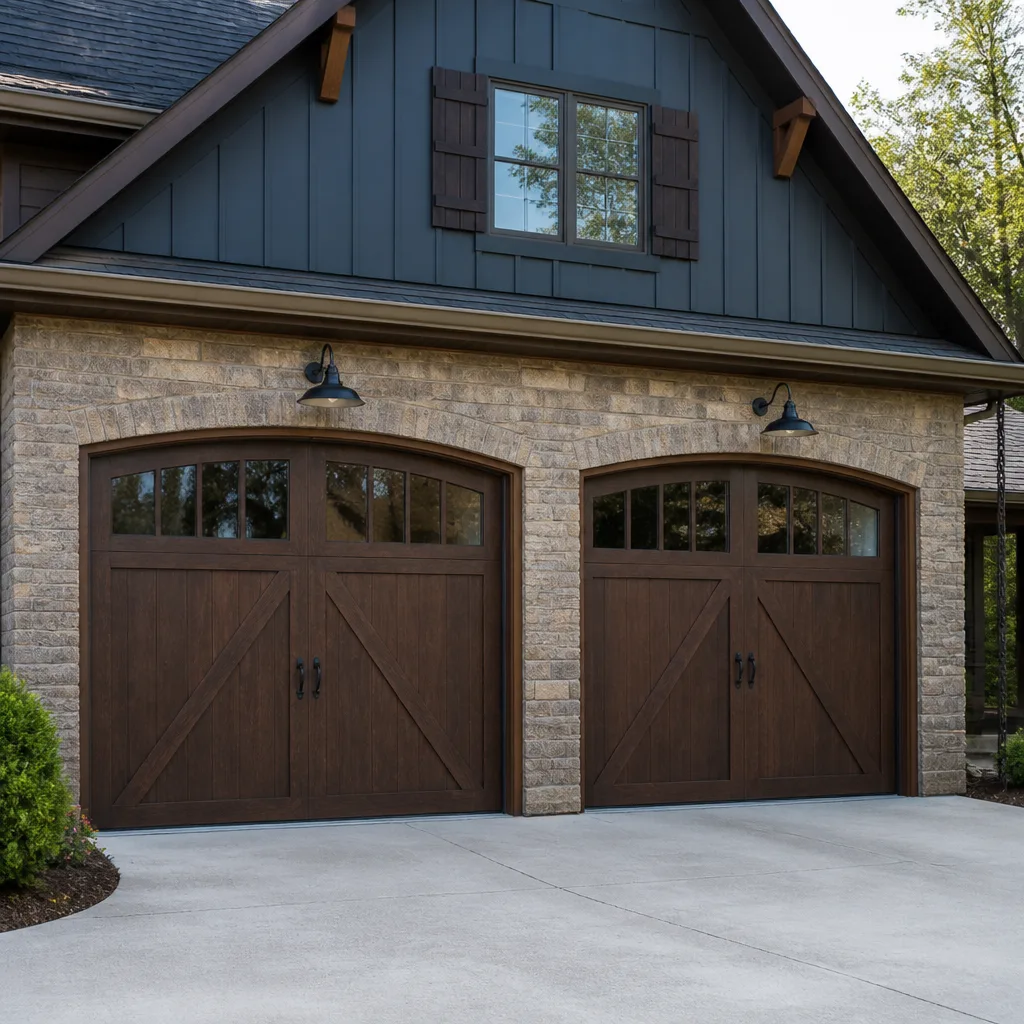 Carriage house
 Modern flush
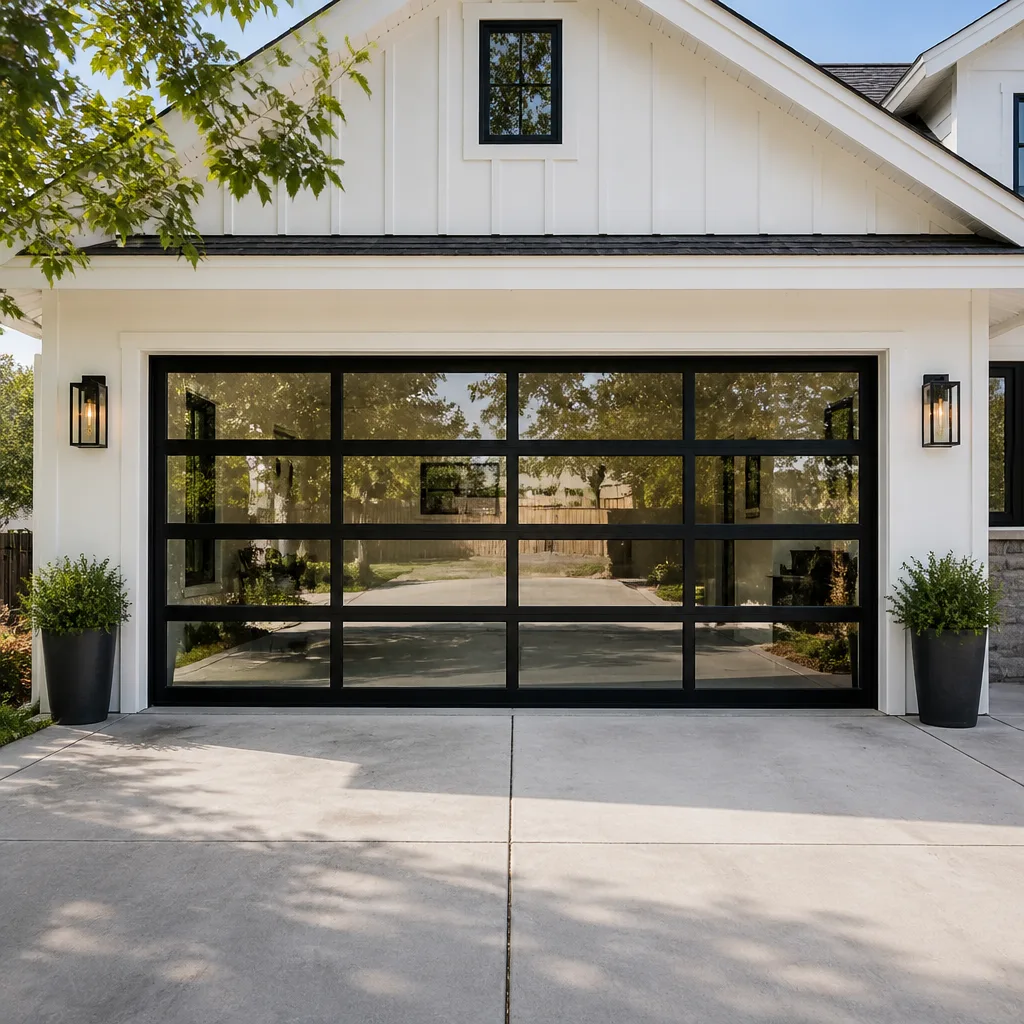 Full-view glass
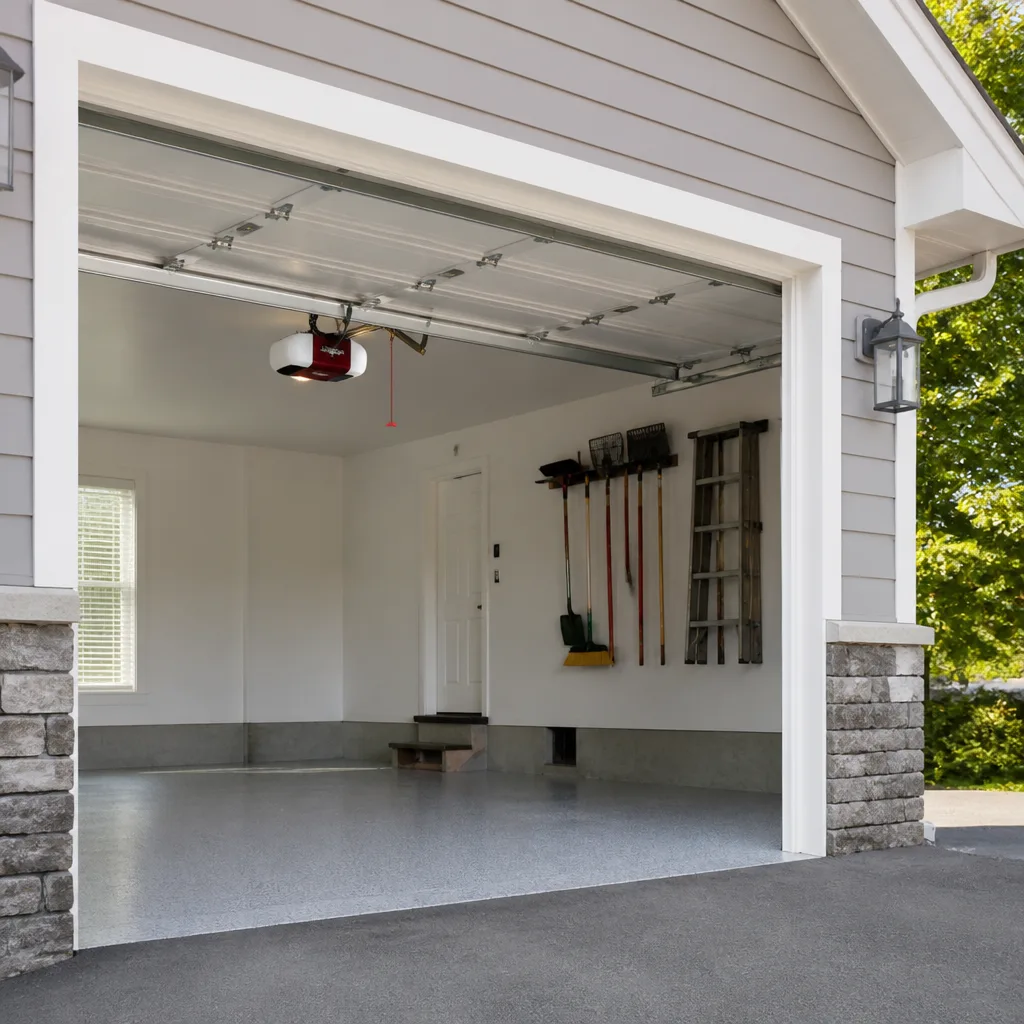 LiftMaster openers
 Chamberlain openers
Full 25-point door and opener safety check with every visit - springs, cables, rollers, tracks, and your LiftMaster or Chamberlain opener included
You get a price before we start. It does not change when the pro arrives.
Get your free estimateDIY vs Professional Garage Door: The Chesapeake Homeowner’s Decision Guide
Most advice about garage door DIY draws the line in the wrong place. It frames the question as a skill test: are you handy enough? That’s the wrong lens. The right one is risk math. Some garage door tasks are genuinely safe for a homeowner with basic tools, and doing them yourself saves real money. Others involve components under extreme stored tension, where a single mistake can break a bone or worse. This guide draws that line task by task, so you know exactly where DIY stops making sense and professional work begins. It’s written for Chesapeake homeowners who want honest answers, not a sales pitch.
Quick Answer
Lubrication, safety sensor alignment, weatherstripping replacement, and visual inspections are safe DIY garage door tasks for most homeowners. Spring replacement, cable replacement, bottom bracket work, panel replacement under tension, and opener electrical fault diagnosis are not – these involve stored mechanical energy or live wiring that can cause serious injury, and they belong to a trained professional. Everything else sits in between, and the deciding factor is usually whether the work interferes with the door’s tension system or its electrical components.
Styles & brands we work with
- Raised-panel steel
- Carriage house
- Modern flush
- Full-view glass
- LiftMaster openers
- Chamberlain openers
Table of Contents
- Why Garage Door Work Is Different From Other Home Repairs
- Task-by-Task: What’s Safe to DIY and What Isn’t
- The Injury Profile: What Actually Happens in DIY Spring and Cable Failures
- The Real Math: What DIY Saves You and What It Costs You
- What “I’ll Watch a YouTube Video” Gets Right and What It Misses
- Telling Your Technician What You’ve Already Done
- Common Mistakes to Avoid
- When to Call a Professional
Why Garage Door Work Is Different From Other Home Repairs
A torsion spring under full tension stores roughly 100 foot-pounds of energy. That number is physics, not a scare tactic, and it explains almost everything about how garage door repair is priced and why the trade treats certain jobs differently. When that energy releases uncontrolled – through a snapped spring, a slipped cable, or a bracket that lets go – it releases in a fraction of a second. There’s no warning, no gradual failure, no chance to step back.
Compare that to the repairs most homeowners handle themselves. A leaky faucet makes a mess. A sticky door hinge squeaks. A cracked tile stays cracked. A garage door is different because it’s one of the only systems in a house that combines heavy components, high tension, moving parts, and electrical controls in a single unit that runs every day. The torsion spring balances a door that can weigh well over a hundred pounds; it’s doing real mechanical work every time you press the opener.
That’s why a generalist handyman often declines spring work, and it’s not laziness. It’s the correct professional call. A trade that involves stored energy on this scale requires specific tools (winding bars, not screwdrivers), specific technique, and a working knowledge of the door’s balance and tolerance. In our experience around Chesapeake, the calls that go wrong are almost always the ones where a homeowner tried to substitute household tools for proper procedure.
This doesn’t mean all garage door work is dangerous. Far from it. Lubrication, sensor cleaning, and weatherstripping are about as routine as home maintenance gets. The point is narrower: certain components carry a risk profile that no amount of general handiness neutralizes. Those are the ones where professional work is the only rational choice.
Task-by-Task: What’s Safe to DIY and What Isn’t
Here’s the definitive split. If a task appears in the first list, a reasonably careful homeowner can do it with basic tools. If it appears in the second, leave it alone.
Legitimate DIY tasks
- Lubrication. Hinges, rollers, and the torsion bar bearing plates benefit from a proper garage door lubricant a few times a year. It quiets the door and reduces wear on moving parts.
- Safety sensor alignment. The two small sensors at the bottom of the door tracks need to face each other and stay unobstructed. A misaligned sensor is the most common reason a door won’t close, and straightening it is genuinely a five-minute job.
- Weatherstripping replacement. The rubber or vinyl seal along the bottom of the door and around the frame wears out, especially with temperature swings. Replacing it is safe, cheap, and noticeably improves how well the door seals.
- Visual inspection. Walking around the door, checking for frayed cables, worn rollers, loose bolts, and uneven gaps costs nothing and catches problems early.
- Cleaning and debris removal. Keeping the tracks free of leaves, dirt, and spider webs prevents many small tracking problems before they start.
- Opener remote and keypad programming. Pairing a new remote or resetting a keypad code is a homeowner task spelled out in the opener’s manual.
Professional-only tasks
- Torsion and extension spring replacement. High-tension work that requires proper winding bars and technique.
- Cable replacement. Cables are under tension too, and a released cable can whip with force.
- Bottom bracket work. The brackets at the door’s base hold the cable ends and can fail violently when disturbed.
- Panel replacement on a tensioned door. A new panel changes the door’s weight and balance, which means the spring system has to be adjusted to match.
- Opener electrical diagnosis. Circuit board, capacitor, and wiring faults involve live electrical components and need a trained hand.
- Door off-track repair. A door that has left its tracks is unstable and can drop without warning.
The line between these two lists is mechanical tension. If the task requires you to touch a spring, a cable, or a bracket that’s holding weight, it’s professional work. If it doesn’t, it’s fair game. That single rule covers the vast majority of decisions a Chesapeake homeowner will face.
The Injury Profile: What Actually Happens in DIY Spring and Cable Failures
Here’s where we’re careful, because the goal is understanding, not fear. Every year, homeowners across the country get hurt doing garage door work they’d been told was straightforward. The injury pattern is consistent enough that it’s worth spelling out plainly, because understanding the mechanism is what helps people make a clear call.
With springs. A torsion spring holds the door’s weight so the opener only has to lift a fraction of it. Winding or unwinding it by hand means gripping a steel bar inserted into the spring’s winding cone while the tension builds or releases. If the bar slips out of its hole – and it can, when the cone is rusty or the bar is a screwdriver instead of a proper winding bar – the bar becomes a flying projectile, and the spring spins loose at full force. People break wrists, fingers, and arms this way. Extension springs carry a similar risk and can snap back toward the opener when they fail.
With cables. Cables run from the bottom brackets up through the drums. When a cable is under load and releases, it whips. Cuts, lacerations, and eye injuries are the common result. The bottom bracket itself, when it lets go, can catch a hand or a foot with enough force to cause fractures.
The bigger point. None of this is about being clumsy or timid. It’s about stored energy releasing unpredictably. Professionals use purpose-built tools, secure the door against movement first, and follow a fixed sequence that keeps their hands out of the danger path. That procedure is why spring work costs what it costs. You’re not just paying for the spring; you’re paying for the winding bars, the door-blocking clamps, the knowledge of balance and tolerance, and the certainty that nobody in the house gets hurt.
If you take nothing else from this guide, take this: a snapped spring or cable is the moment to stop and pick up the phone. Call garage door repair specialists without touching the door. A trained technician arriving at a clean, untouched scene is a simpler fix than a technician arriving at a scene where someone has already tried.
The Real Math: What DIY Saves You and What It Costs You
The money question is fair: how much does DIY actually save? Let’s break it down honestly, task by task, because the answer isn’t uniform.
Where DIY genuinely saves money
For the safe tasks, DIY is a clear win. Lubrication costs the price of a tube of garage door lubricant. Sensor alignment costs nothing but a minute. Weatherstripping is a modest material cost that most homeowners can install in under an hour with a measuring tape and a utility knife. A visual inspection is free. These tasks, done on a regular schedule, prevent bigger problems and keep the door running quieter and smoother. In our experience, steady home maintenance is the cheapest thing a Chesapeake homeowner can do for a garage door.
Where the math turns
For spring, cable, and bracket work, the honest math flips. On the surface DIY looks cheaper because you’re skipping labor. But the hidden costs add up fast:
- Tool cost. Winding bars, door blocking clamps, and a torque wrench aren’t things most homeowners own. Buying them can offset a big chunk of the labor a professional would charge, and they’ll sit unused afterward.
- Time cost. Proper spring replacement isn’t a fifteen-minute job even for a pro. For a first-timer it’s an afternoon of careful, high-concentration work, often with trial and error on the balance.
- Do-over cost. Getting the winding wrong means loosening and rewinding, which is the most dangerous part of the job done twice. Or it means calling a professional anyway, plus the cost of the spring you may have damaged.
- Balance costs. A spring set to the wrong tension affects the door’s travel, wear, and safety. Uneven tension can lead to premature roller and opener failure, which means more repair money down the road.
When you add up tools, time, and the real risk of a redo, spring work rarely saves a homeowner anything even before you factor in injury. The written estimate a professional gives you accounts for all of this; a DIY budget usually doesn’t. This is where professional work isn’t an upsell. It’s the cheaper path once you count the whole job.
For any task on the safe list, the opposite is true: doing it yourself keeps money in your pocket and gives you a working knowledge of your door. Our advice is to stay firmly on the safe side of that line and let the pros handle the rest. When a repair or garage door installation is genuinely outside the DIY set, we quote the job upfront and settle the price before any work begins.
What “I’ll Watch a YouTube Video” Gets Right and What It Misses
Video guides have made homeowners more capable than they were twenty years ago, and that’s a good thing. A well-made lubrication walkthrough or sensor troubleshooting video will get you through those tasks correctly. The videos are usually clear, and the visual demonstration is genuinely helpful in a way a manual isn’t.
But there’s a gap between the video and the door in your garage, and it shows up in a few specific places.
The video was shot on a different door. A spring replacement tutorial was likely recorded on one specific door brand and model. Your door’s spring, winding cone, and bracket geometry may be different. Chesapeake homes have a wide range of door brands – we work with Clopay, Amarr, Wayne Dalton, and Craftsman among others – and the tolerances, mounting points, and spring specifications vary. A procedure that works on one brand can damage another if you follow it blindly. Knowing your hardware is half the reason brand familiarity matters.
The video skips the preparation. Videos tend to compress the critical first step: securing the door so it can’t move while you work. In real life, clamping the door, releasing tension safely, and confirming balance all take time and specific tools. When that’s skipped, the video looks easier than the job is.
The video can’t see your specific problem. A general “fix a broken spring” video can’t tell you whether your door is balanced, whether your opener is straining, whether your tracks are bent, or whether your seal problem is really a weatherstripping issue or a warped panel. Diagnosis needs eyes on the door, not a generic walkthrough.
The video doesn’t cover Chesapeake’s conditions. The area gets real temperature swings through the year, and doors expand and contract with that. Springs stiffen in cold and settle in heat. Rollers wear faster when a door runs out of balance. A generic video doesn’t account for how the door on your house has aged in this climate. That’s the kind of pattern local technicians see again and again.
The video’s safety hands aren’t your hands. The person in the video has done this many times, uses the right tools, and doesn’t show the failed attempts. The skill you’re watching isn’t transferred by watching it. That’s the part that gets skipped.
The takeaway is straightforward: videos are great for maintenance, and they’re genuinely useful for understanding your door. For high-tension work, the gap they leave is the gap professionals fill.
Telling Your Technician What You’ve Already Done
Homeowners often hesitate to mention their DIY attempts to a technician. They worry about being judged or charged extra. Please don’t hesitate. Transparency actually saves you money and time, because a technician who knows what you’ve touched can go straight to inspecting that area rather than starting from scratch, and can avoid rework.
Follow this sequence when a technician arrives:
- Tell them what you did. Lubrication, sensor work, weatherstripping, a remote reset, or anything more involved. List it briefly and plainly.
- Tell them what you observed before and after. Was the door noisier, slower, uneven, sticking on one side? Did the problem change after your work? This is diagnostic gold.
- Show them what you used. If you loosened a bolt, substituted a tool, or tightened something back up in a non-standard way, point it out. It’s better to have it checked than to wonder.
- Ask for a visual inspection of your work. A technician can look at your sensor alignment, your weatherstripping, your lubrication coverage, and your panel condition in a minute. They’ll tell you if anything needs adjusting, and if it’s fine, they’ll say so.
- Get the estimate before work begins. Confirm the price and scope in writing. Any reputable professional will agree to this. We insist on it.
A good technician won’t charge you to redo work that’s already correct. In our experience, the conversation is quick, and most of what a homeowner has done is either fine or a small fix. And when we find a genuine problem, we can tell you exactly what needs correcting so you know what you’re paying for. That’s the point of the visit.
Common Mistakes to Avoid
- Using a screwdriver as a winding bar. This is the single most common serious mistake. Screwdrivers have a thin shaft and a small tip; they slip out of the winding cone, and the bar comes back at you. Never substitute.
- Lubricating the tracks. The tracks should be dry. Lubricant collects dirt, the rollers stop rolling and start sliding, and the door’s motion degrades. Lubricate the hinges, rollers, and springs, not the tracks themselves.
- Skipping the door clamps. Before any winding, the door needs to be clamped to the track or blocked so it can’t move. Skipping this step turns a small mistake into a serious one.
- Leaving a broken spring in place while you wait. A door with a failed spring is likely to fall or damage the opener when used. Don’t run the door; get it looked at. In Chesapeake, the temperature swings between seasons put extra strain on older springs, so a snap isn’t always a surprise.
- Forcing a misaligned sensor by bending the bracket. If the sensor keeps drifting, the bracket is probably the real problem. Bending it back repeatedly weakens it; often the bracket needs re-mounting or replacing, which is a professional job.
- Ignoring an unbalanced door. If the door won’t stay at the halfway mark when you lift it by hand, the spring balance is off. That’s not a DIY fix – it’s a sign of a spring problem that needs a trained technician.
- Treating a panel crack as cosmetic. A cracked panel affects the door’s structure and, if it’s a tensioned door, can cause balance issues. Have it assessed rather than patching it and hoping.
When to Call a Professional
Call a professional the moment any of these come up: a snapped or sagging spring, a cable that’s come loose or damaged, a door that’s left its tracks, a bottom bracket that’s failed, a door that won’t stay balanced when lifted by hand, an opener that sparks, trips repeatedly, or won’t respond, or a panel that needs replacing. Don’t run the door in any of these situations; secure it and make the call.
For maintenance tasks on the safe list, you don’t need us – that’s the whole point of this guide. But if you’re unsure after a visual inspection, or a small issue keeps coming back, getting a professional opinion is worth the call. Our technicians have up to 15 years of experience with the door brands most Chesapeake homes have. Chesapeake Garage Door Repair Co offers free estimates in Chesapeake – call (866) 476-9023. We’ll quote a price, explain what we found, and settle the number before any work begins. If your opener is the issue rather than the door, we handle garage door opener repair as part of the same visit, and we work on the hardware that’s actually installed on your door, from LiftMaster and Chamberlain to Genie, Clopay, Amarr, Wayne Dalton, Craftsman, and Raynor.
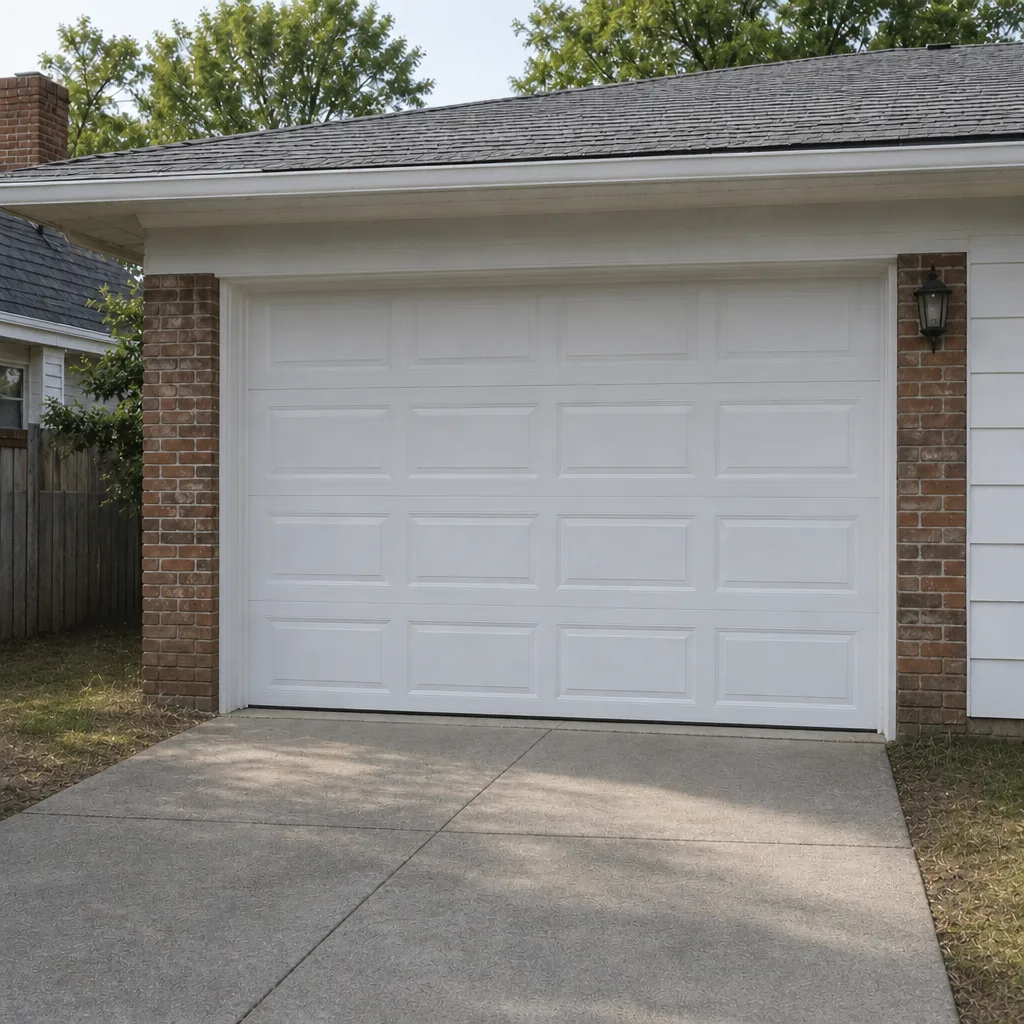
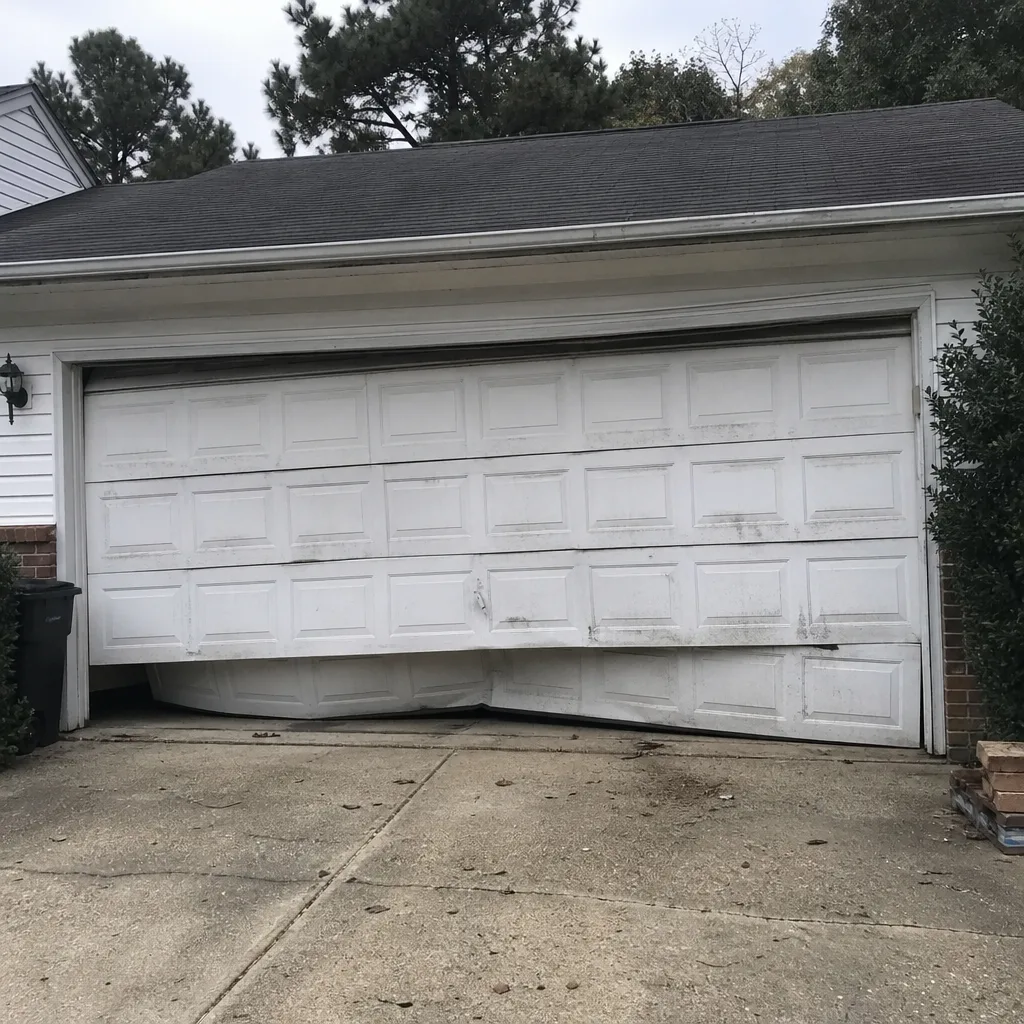
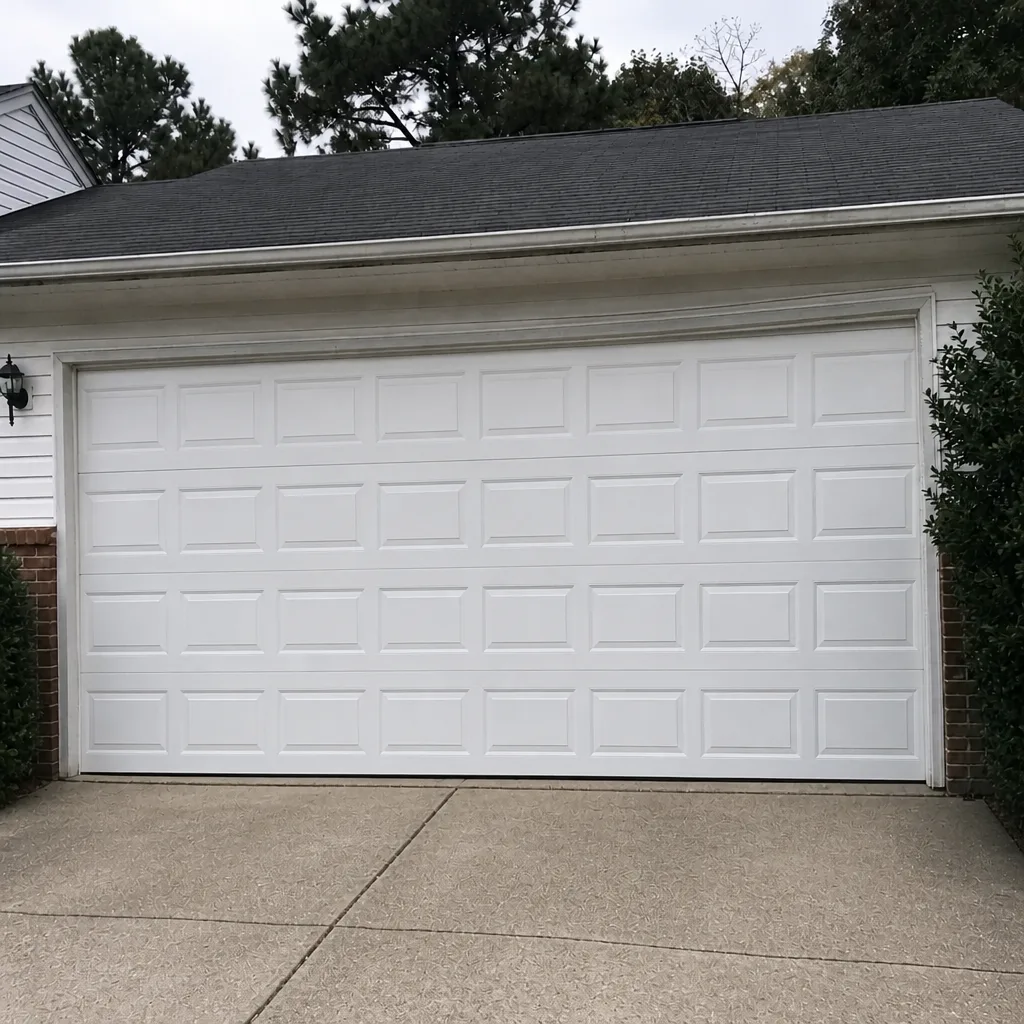
See the difference
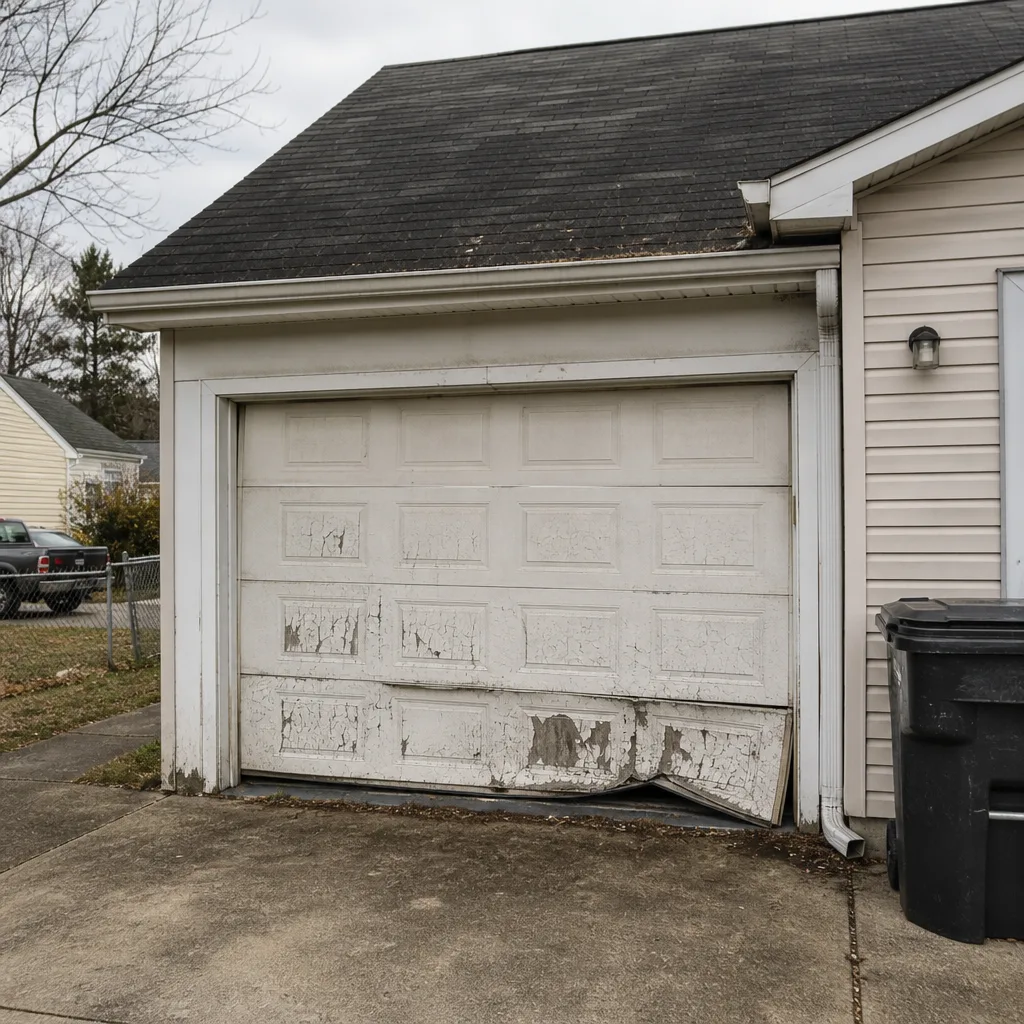 Before
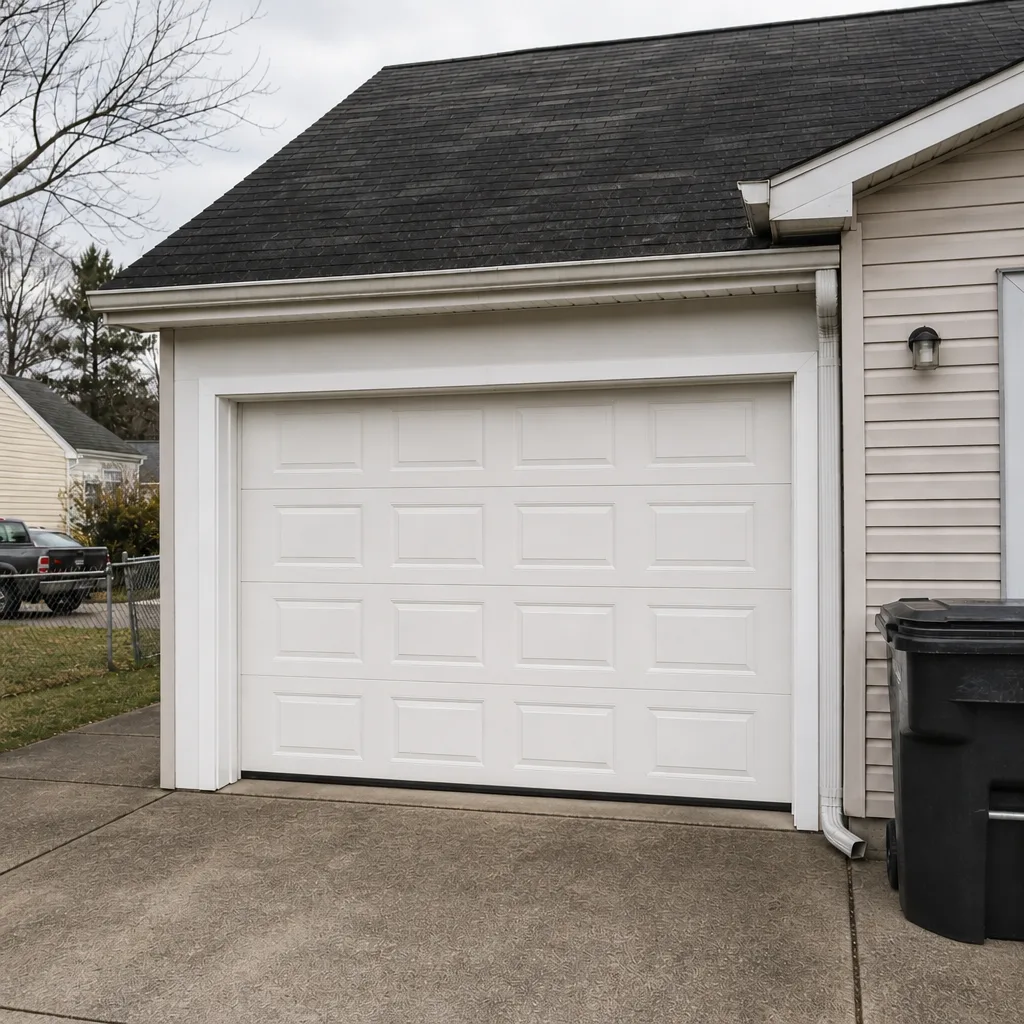 After
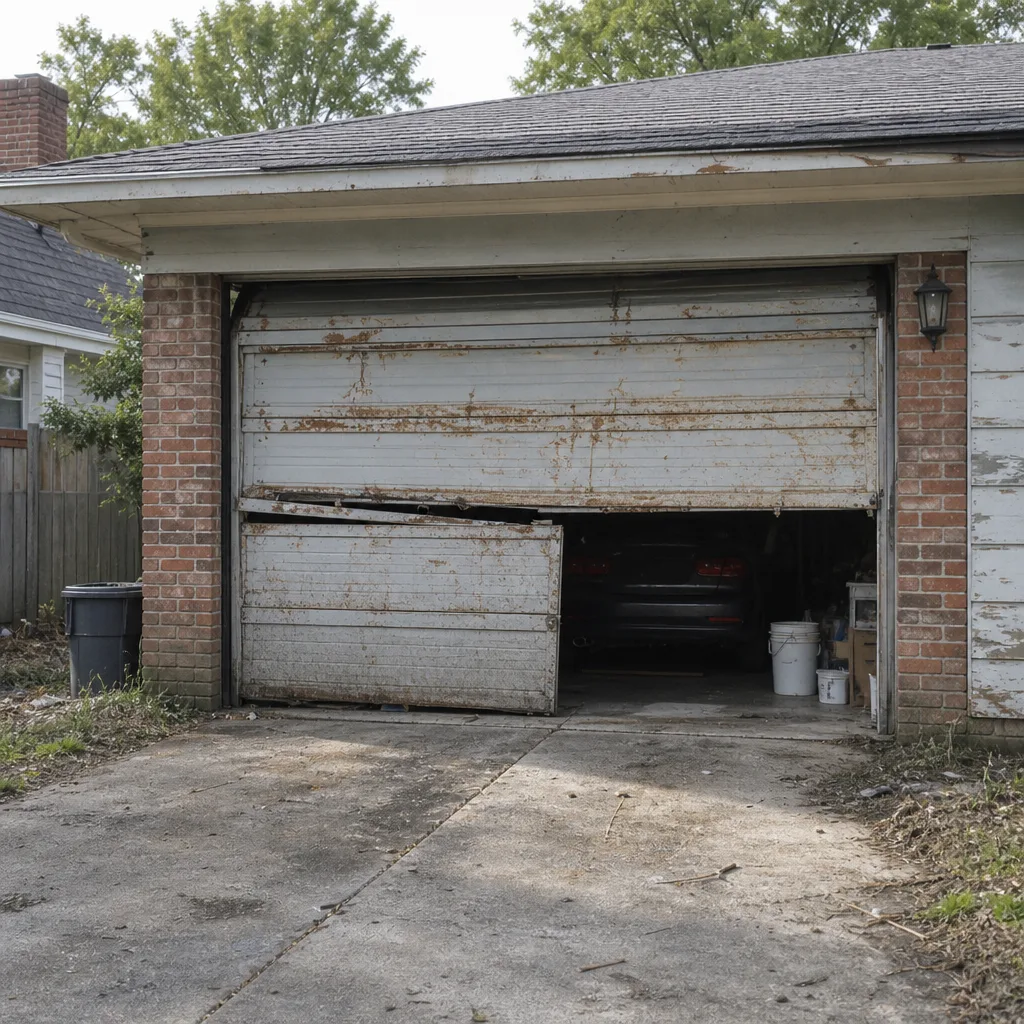 Before
 After
 Before
 After
Frequently Asked Questions
No – spring replacement involves stored mechanical energy that can cause serious injury, so it belongs to a trained professional. A torsion spring under full tension holds a large amount of energy, and improper handling can release it unexpectedly. The safe approach is to secure the door and call a technician who has the proper winding bars, clamps, and procedure. Call (866) 476-9023 for a free estimate.
Lubrication, safety sensor alignment, weatherstripping replacement, visual inspections, debris removal, and remote or keypad programming are all safe for most homeowners. The rule of thumb: if the task doesn’t involve springs, cables, or bottom brackets, it’s fair game. Anything that touches the door’s tension system is professional work. Call (866) 476-9023 if you’re unsure.
The price depends on the specific job – a broken spring, a cable, an opener fault, a panel, or a balance issue – so the honest answer is that it’s quoted after an inspection. The estimate is given in writing and agreed before any work starts, so you know the number before anything happens. Estimates are free. Call (866) 476-9023.
Emergency service is a real service, not a marketing line, so call and we’ll tell you what’s possible for your address. A snapped spring means the door shouldn’t be used until it’s repaired, so get it assessed rather than running the door. Call (866) 476-9023.
Because lubrication collects dirt and grit, which makes the rollers slide instead of roll and degrades the door’s motion. The tracks should stay dry. Lubricate the hinges, rollers, and springs instead – that’s where friction actually matters. If your door is acting sticky despite proper lubrication, it may need more than maintenance. Call (866) 476-9023 for a free estimate.
Lift the door by hand to about halfway and let it go gently; a balanced door should stay roughly where you leave it rather than sliding down or springing up. If it falls or rises on its own, the spring balance is off, which isn’t a DIY fix. Have it checked by a technician. Call (866) 476-9023.
The Bottom Line
The DIY line isn’t about how handy you are – it’s about stored energy. Lubrication, sensor alignment, weatherstripping, and inspection are safe, genuinely helpful homeowner tasks that save money and keep the door running well. Springs, cables, and bottom brackets are professional work, not because homeowners can’t understand them but because the injury risk and the hidden do-over costs make the math unfavorable every time. Video guides help with maintenance and fall short on high-tension work, and being upfront with a technician about what you’ve done yourself makes the visit quicker and cheaper. If you’re ever unsure, ask. Call (866) 476-9023 for a free estimate, and we’ll give you a straight answer about what’s safe to handle and what we should take care of.
Contact Chesapeake Garage Door Repair Co
If your garage door needs attention, call Chesapeake Garage Door Repair Co at (866) 476-9023 for a free estimate. We quote the price and settle it before any work begins, whether it’s a spring repair, an opener fault, a panel replacement, or a full door installation. Our technicians have up to 15 years of experience and know the hardware installed on most homes around Chesapeake. We handle the whole job, from a snapped spring to a brand-new door, and we’re available for emergency calls when a door fails outside the usual day. Call today for a straight answer on what your door needs.
Written by the team at Chesapeake Garage Door Repair Co.